
















Stabilize Before You Scale: A Claims Backlog Recovery Infographic
Claims backlog recovery is often treated as a capacity problem: add staff, increase production targets, and push more claims through the queue. But when backlog is sustained by unclear inventory, rework, training gaps, workflow breakdowns, or limited reporting visibility, adding capacity alone may only create temporary relief.
This infographic outlines five areas healthcare payer leaders should assess before scaling claims backlog recovery efforts. The framework emphasizes stabilization first: understanding the inventory, identifying root causes, strengthening quality and workflow, improving reporting, and adding capacity only where it is truly warranted.
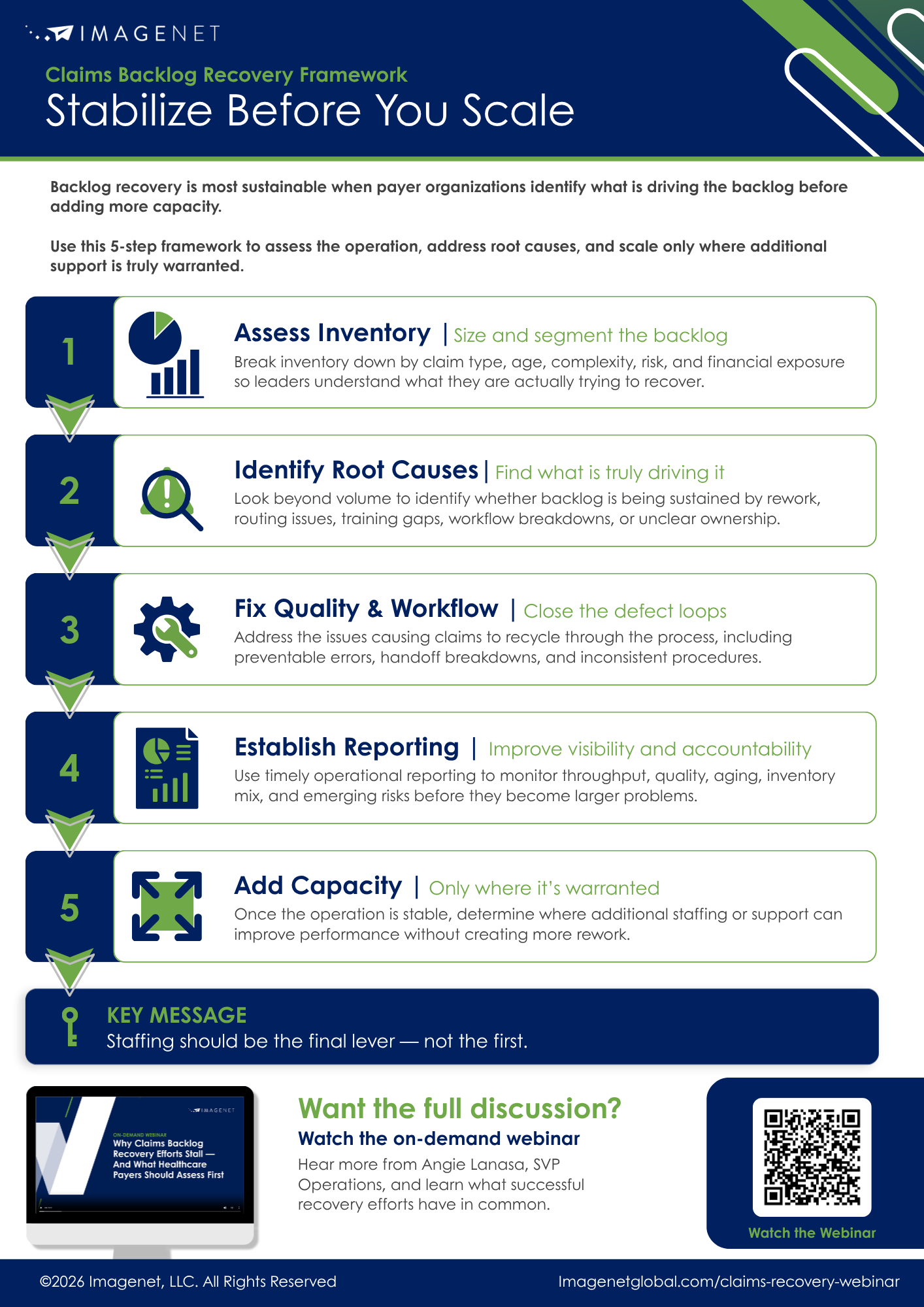
Why Claims Backlog Recovery Requires More Than Capacity
When claims teams are under pressure, it can be tempting to respond with more people, more overtime, or higher production goals. But without a clear understanding of what is driving the backlog, those efforts can increase rework, strain examiners, and make it harder to sustain improvement over time.
A more effective recovery approach starts with visibility. By segmenting inventory and identifying where work is breaking down, payer organizations can make more informed decisions about where process improvements, training, reporting, or additional support are needed.
Stabilize the Operation Before You Scale Resources
Sustainable backlog recovery depends on addressing the operating conditions that allow backlog to recur. That includes improving quality controls, closing workflow gaps, monitoring performance more frequently, and creating accountability around the right metrics.
Once the operation is more stable, additional capacity can become a strategic decision rather than a reactive one. The goal is not simply to reduce inventory temporarily, but to build a recovery approach that holds.
Watch the Full Claims Backlog Recovery Webinar
Hear Angie Lanasa, SVP Operations, explain what payer leaders should assess before adding claims capacity.