
Health Plan 2026 Readiness: What to Prepare For — and How to Reduce Operational Risk
Senior leaders from Imagenet share cross-functional perspectives on the changes that matter most in 2026 and how health plans can strengthen accuracy, compliance, and operational stability in a high-pressure year.

2026 represents one of the most consequential operational years for health plans in the past decade. With new accuracy expectations, expanded compliance requirements, shifting cost structures in Medicare Advantage, and rising member-facing scrutiny across the intake → claims → communications → contact center ecosystem, plans face a convergence of pressures that demand earlier decisions, tighter data governance, and stronger cross-functional coordination.
To help plans understand where the biggest risks — and opportunities — lie, Imagenet convened leaders from Technology, Operations, and Compliance for a 2026 Readiness Expert Roundtable.
In the following sections, our SMEs outline:
Which 2026 changes will have the greatest operational impact
What cross-functional shift most reduces risk
The most overlooked pitfalls
The decision leaders can’t postpone any longer
Their perspectives reveal clear patterns: accuracy must start upstream, governance needs to be shared, modernization cannot be deferred, and AI only reduces risk when guardrails are in place.
These insights can help health plans anticipate the operational load of the 2026 cycle — and build stable, defensible, member-ready processes before deadlines compress.
Our Expert Panel
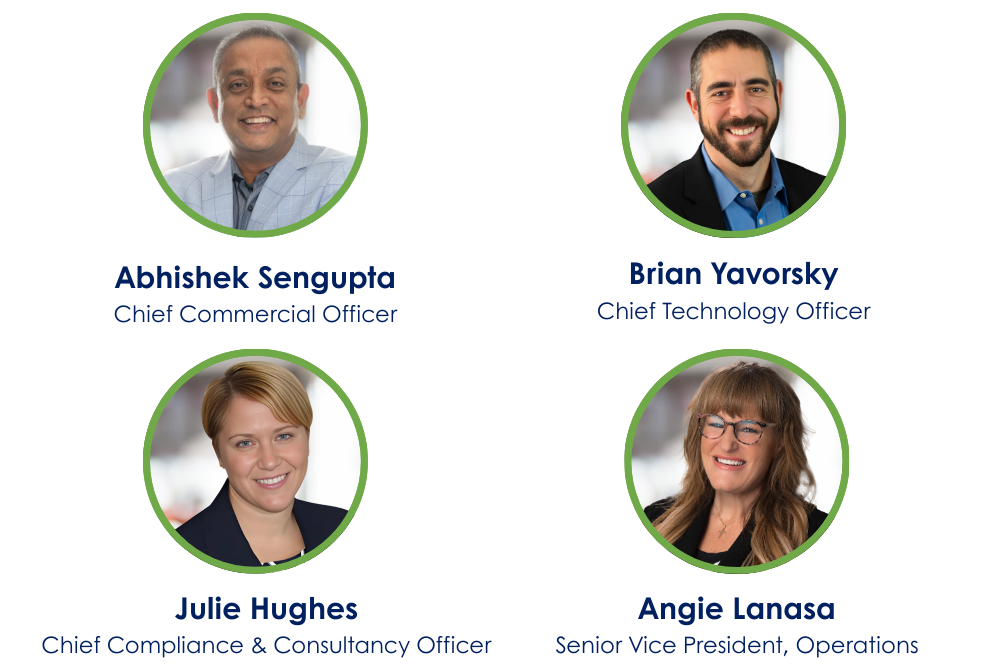
Which 2026 Changes Will Have the Biggest Operational Impact?
Across all four leaders, the 2026 landscape centers on rising expectations for accuracy, auditability, and timeliness across Medicare Advantage and Medicaid operations. Regulatory pressure is increasing, documentation standards are tightening, and member-facing scrutiny is intensifying. While each leader emphasizes a different driver — benefit shifts, compliance expansion, or AI governance — they align on a shared truth: upstream data quality and governed workflows will dictate operational readiness.
Brian Yavorsky
Medicare Advantage plans face cost and regulatory pressures in 2026 that will reshape both benefits and operations. Supplemental benefits will narrow while telehealth and in-home support expand. At the same time, new CMS accuracy and timeliness expectations — including stricter provider directory submissions and encounter reporting — will increase the operational cost of data inconsistency. These pressures are among the reasons some insurers have exited the MA market, forcing members into new coverage in a tighter, more regulated environment.
Julie Hughes
The greatest impact will come from expanded compliance and transparency requirements across MA and Medicaid. Prior authorization transparency, interoperability expectations, rising scrutiny of utilization management, and increased member-access oversight elevate the importance of documentation, audit readiness, and data integrity. Contact centers, in particular, face increased accountability for accuracy and first-call resolution.
“Transparency and documentation expectations are higher than ever before.”
Abhishek Sengupta
Two shifts will shape 2026 most. First, regulators are tightening expectations around timeliness, transparency, and auditability across claims and member-facing operations. CMS and several Medicaid agencies are reinforcing stricter standards for processing, correspondence accuracy, and defensible documentation, which puts pressure on downstream functions when intake is fragmented or manual.
Second, as plans experiment with AI for classification, extraction, and communications, regulators are emphasizing governance: lineage, thresholds, and human-in-the-loop controls. The issue isn’t adopting more AI, but ensuring automated decisions hold up under audit. Plans that modernize capture, classification, and workflow routing will be better positioned to meet these expectations.
The Cross-Functional Shift That Most Reduces Risk
Despite coming from different functional areas, the SMEs unanimously agree that the single highest-impact move for 2026 is to eliminate upstream variation. They describe it as a unified accuracy workflow, a shared framework, governed intake, or standardized QA — but the throughline is identical: when everyone works from the same definitions and validated data, downstream errors, rework, and compliance exposure drop dramatically.
Brian Yavorsky
The highest-impact shift is a unified accuracy workflow across intake → claims → member communications → the contact center. Enforcing a single definition of “clean data” before it moves downstream reduces adjudication errors, prevents conflicting messages, stabilizes scripts, and eliminates manual rework during peak cycles.
“Every major 2026 dependency strengthens when accuracy starts upstream.”
Angie Lanasa
The most important change is a shared accuracy framework: aligned QA scoring, unified definitions, and feedback loops that catch upstream errors early. When intake, claims, and communications use the same rules and source-of-truth, downstream variation drops and member-facing issues decrease.
Abhishek Sengupta
The most risk-reducing move is standardizing a governed intake layer that produces accurate, structured, and audit-ready data for all downstream functions. When capture and classification rules are consistent, claims receive cleaner routing, member communications reconcile more reliably, contact centers gain clearer context, and compliance gains full lineage for audits. Intake is often seen as a mailroom function, but in reality it sets the conditions for every operational milestone that follows. Stabilizing it reduces variation, prevents avoidable exceptions, and strengthens the foundation needed to meet 2026 requirements.
The Most Overlooked Operational Pitfall
Across technology, operations, and compliance, each leader identified a different flavor of the same underlying issue: drift. Configuration drift, process drift, documentation drift, and reconciliation drift accumulate quietly and then surface only when a claim, letter, or interaction hits production. Preventing drift requires shared governance, continuous validation, and more frequent cross-functional calibration.
Brian Yavorsky
Cross-system reconciliation is the blind spot. A handoff may be considered “complete,” but mismatches in configuration, field logic, or data lineage appear only once a communication, EOB, or claim is generated. Continuous schema checks and automated lineage validation prevent late-cycle defects.
Angie Lanasa
Silent drift — in processes, training, QA, or scripting — is the hidden risk. Small inconsistencies compound until accuracy and timeliness degrade. Preventing this requires disciplined calibration, standardized QA, and automation that ensures repeatable workflows.
“Silent drift accumulates quietly — and suddenly shows up in accuracy and timeliness issues.”
Julie Hughes
Inconsistent documentation and data handoffs remain a major risk under rising CMS expectations. Claims accuracy, prior authorization documentation, member transparency — all depend on clean, consistent, traceable records. Embedding compliance checkpoints across operational areas reduces audit exposure.
The Decision Leaders Cannot Postpone Any Longer
The leaders converge on a shared message: 2026 is the year health plans must commit to governed modernization — especially around AI and automation. Whether framed as defining thresholds for AI, deciding where automation belongs, or modernizing fragmented workflows, all four SMEs caution against waiting until deadlines compress. Plans need time to pilot, calibrate, and operationalize these decisions before regulatory pressure intensifies.
Angie Lanasa
Leaders must decide where automation belongs across intake, adjudication, and service. Deferring this forces teams to rely on manual workarounds that introduce inconsistency and slow resolution. Early decisions allow for training, QA alignment, and controlled rollout.
Julie Hughes
The biggest postponed decision is committing to unified modernization. Fragmented workflows and legacy tools create preventable compliance risk. Modernized, integrated processes allow for standardized documentation, improved timeliness, and clearer member-facing outputs.
Abhishek Sengupta
Many plans are postponing the decision of where to responsibly deploy AI with human-in-the-loop controls. High-volume, rules-based work — intake classification, correspondence processing, triggered communications, provider dispute handling — is now mature enough for AI support, but governance must be defined upfront. Regulators and internal audit teams are emphasizing transparency: thresholds, exception queues, lineage tracking, and quality oversight. Making these decisions in 2026 gives plans time to operationalize AI safely and consistently. Delaying risks a patchwork of pilots rather than a scalable, governed approach that strengthens resiliency going into 2027.
“Leaders who make these decisions in 2026 will build scalable, transparent workflows rather than a patchwork of disconnected pilots.”
The Path Forward for Health Plans
The operational and regulatory pressures converging in 2026 create both risk and opportunity. Plans that invest early in accuracy governance, modernization, and AI with guardrails will be better positioned to meet compliance expectations, reduce rework, and deliver a clearer, more consistent member experience. Cross-functional collaboration — not isolated fixes — will determine which organizations enter 2026 prepared and which face preventable instability.
A strong 2026 strategy starts with upstream accuracy, shared governance, and a commitment to modernizing core workflows before deadlines compress. Health plans that take a proactive, whole-system approach now will create stability, resiliency, and member confidence in a year defined by heightened scrutiny. Imagenet supports this shift by helping plans strengthen data integrity, streamline operations, and build compliant, predictable processes that hold up under real-world pressure.
Want a clearer picture of your 2026 operational risk?
Connect with our experts to evaluate accuracy workflows, data lineage, reconciliation gaps, and opportunities to automate high-volume processes with defensible, audit-ready controls.