
















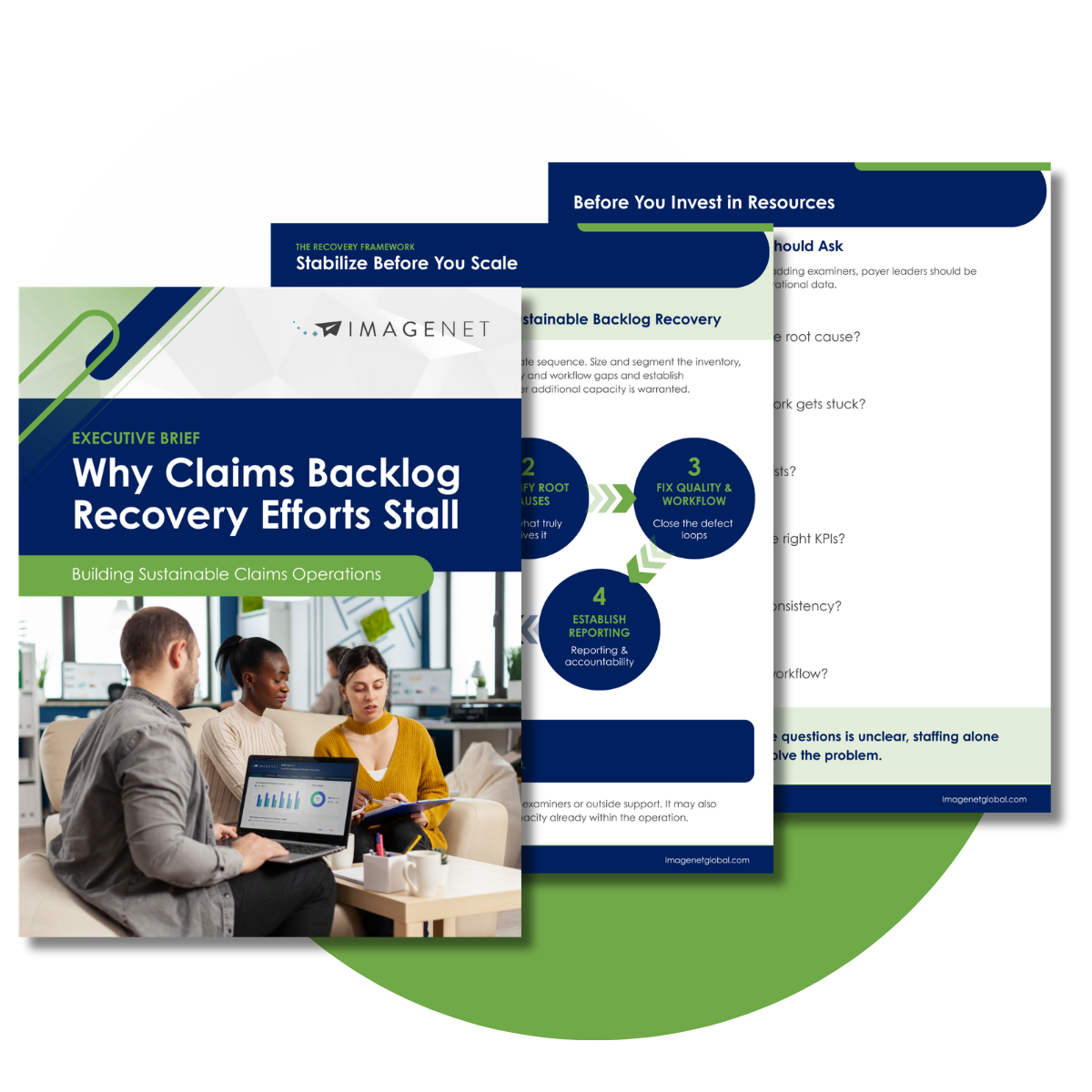

INSIDE THE BRIEF
Look Beyond Claims Volume to Identify What Is Driving the Backlog
High production does not always create sustainable improvement. Claims may continue cycling through the operation because of rework, inconsistent routing, training gaps, limited visibility or unclear ownership.
The brief helps payer leaders examine the conditions beneath the backlog before determining whether additional capacity is the right response.

See Where Work Is Accumulating
Learn how inventory segmentation, aging visibility and claim complexity help leaders identify where work is getting stuck, which claims carry the greatest risk and how much inventory represents repeat work.

Identify the Conditions Creating Repeat Work
Assess how quality issues, training inconsistencies, unnecessary touches, routing problems and unclear ownership can add work back into the operation and limit net improvement.

Stabilize Operations Before You Scale
Explore a five-step sequence for assessing inventory, identifying root causes, closing quality and workflow gaps, establishing reporting and adding capacity only where it is warranted.
Get the Executive Brief
Complete the form for immediate access to Why Claims Backlog Recovery Efforts Stall.
Frequently Asked Questions
What is claims backlog recovery?
Claims backlog recovery is the structured effort to reduce aging or unprocessed claim inventory while stabilizing the conditions that caused it to accumulate. Sustainable recovery addresses not only volume, but also visibility, quality, training, workflow, reporting and accountability.
Why do claims backlog recovery efforts stall?
Recovery efforts often stall when organizations add staff, overtime or production targets without resolving the underlying operational issues. Rework, inconsistent routing, training gaps, unmanaged queues and unclear ownership can continue feeding work back into the backlog.
What should payer leaders assess before adding claims processing capacity?
Payer leaders should evaluate inventory visibility, quality and rework, training and knowledge management, workflow and process design, and operational metrics and accountability. Together, these areas help determine whether the backlog reflects a true capacity gap or an unstable process.
How can healthcare payers reduce a claims backlog without creating more rework?
Start by segmenting the inventory and identifying where work is accumulating and why. Then address quality, training and workflow gaps, establish daily reporting and add targeted capacity only where the data shows it is needed. If your organization needs help determining the right starting point, schedule a conversation with an Imagenet claims expert.
How can payer leaders tell whether backlog recovery is sustainable?
Sustainable recovery is reflected in continued net inventory reduction, stable or improving quality, lower rework and consistent throughput by claim type. Leaders also need timely visibility into aging, ownership and performance so emerging problems can be corrected before inventory builds again.