
















Infographic: 3 Reasons Claims Backlog Recovery Falls Short
Claims backlog recovery is often approached as a capacity problem. Organizations add staff, increase productivity targets, or accelerate throughput in an effort to reduce inventory.
While these tactics may provide short-term relief, they don't always address the operational challenges contributing to recurring backlog. As claims become more complex, sustainable recovery requires greater visibility, better segmentation, and stronger operational discipline.
This infographic highlights three common reasons traditional claims backlog recovery efforts fall short and why healthcare payers should look beyond staffing and throughput when addressing recurring backlog.
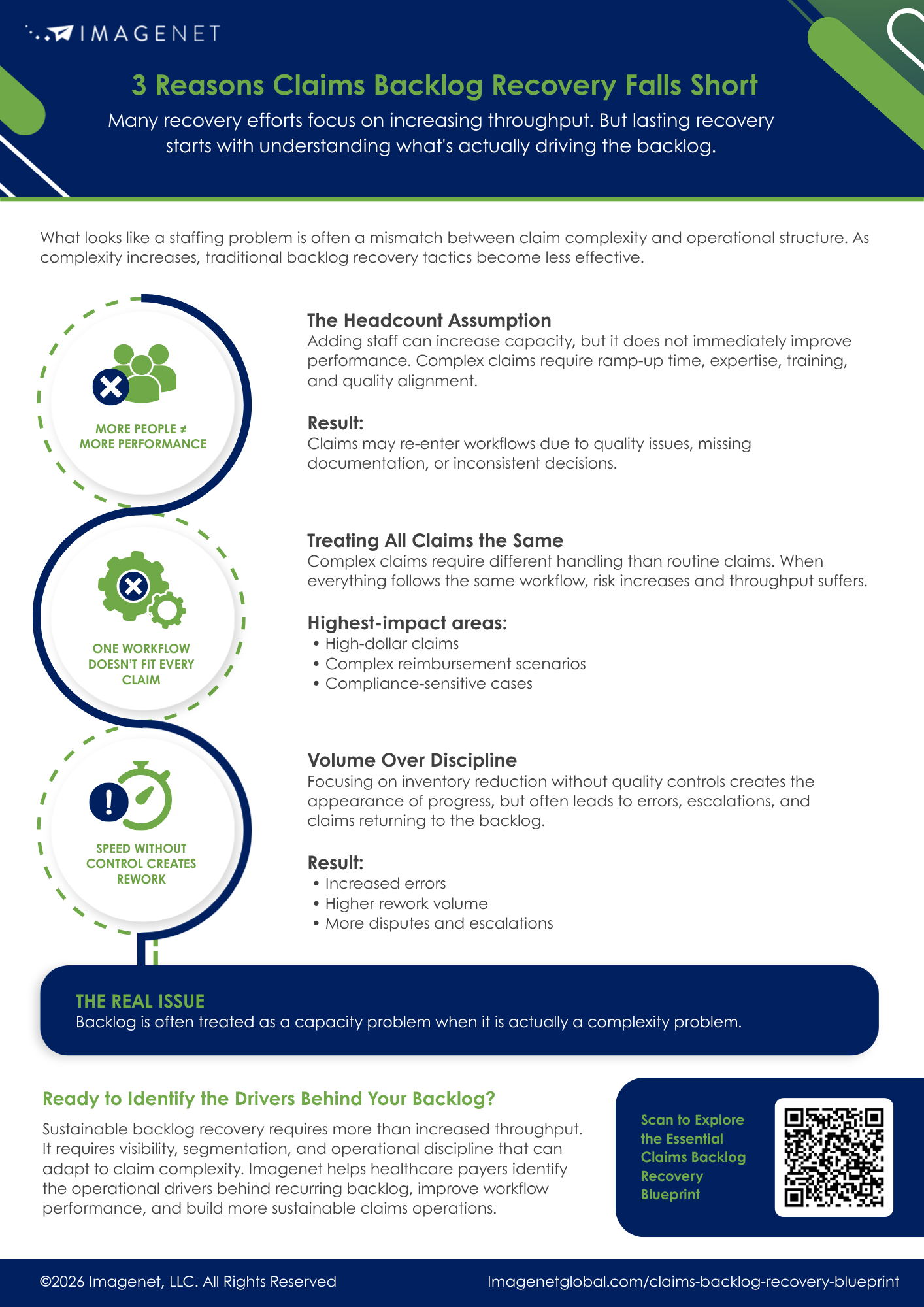
Why Traditional Recovery Approaches Often Miss the Mark
Claims backlog is frequently treated as a staffing challenge when it is actually an operational one. Increasing capacity can improve throughput, but it doesn't automatically improve consistency, quality, or long-term performance.
As claim complexity grows, organizations must balance speed with visibility, standardized workflows, and operational controls that reduce rework instead of simply moving inventory faster.
Building a More Sustainable Recovery Strategy
Effective backlog recovery begins with understanding what's driving the backlog in the first place. By segmenting claims appropriately, improving operational visibility, and reinforcing quality throughout the workflow, healthcare payers can reduce recurring backlog while improving overall claims performance.
Rather than focusing solely on today's inventory, organizations can strengthen the operational foundation that supports more consistent outcomes over time.
Ready to Strengthen Your Claims Recovery Strategy?
Explore practical guidance for identifying backlog drivers, managing claim complexity, and building more sustainable operational performance.