
















Infographic: A Call Is Never Just a Call in Healthcare Payer Contact Centers
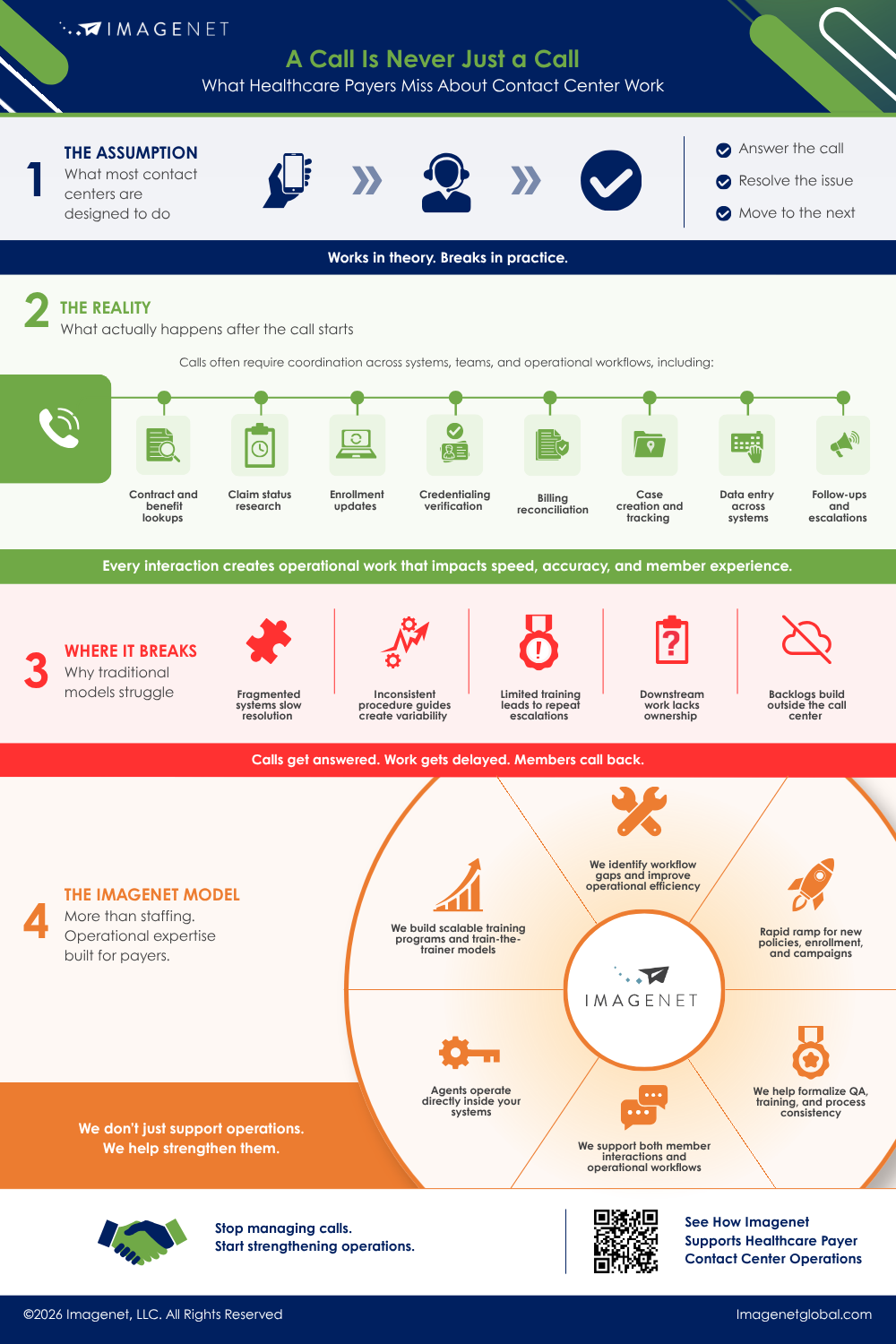
For healthcare payers, contact center interactions are often treated as isolated moments: a call comes in, an agent responds, and the issue is resolved. In reality, every interaction triggers a chain of operational work that spans systems, teams, and workflows.
From benefit lookups and claim status research to enrollment updates and credentialing verification, the work behind each call is what ultimately determines speed, accuracy, and member experience. When that work is fragmented or inconsistently managed, it creates delays, repeat calls, and added pressure across the organization.
See the infographic below for a closer look at what’s really happening behind the call—and how a more integrated approach can improve outcomes.
This infographic highlights four areas healthcare payers should evaluate when assessing enrollment readiness across operations.
The Work Behind the Call
A single interaction often requires coordination across multiple operational processes. Agents may need to access different systems, validate information, update records, and initiate follow-up actions to fully resolve a request.
Traditional contact center models focus heavily on answering calls quickly, but don’t always account for the downstream work required to complete them. This disconnect can lead to inconsistent execution, repeat escalations, and growing backlogs outside the contact center itself.
To improve performance, payers need to think beyond call handling and consider how operational workflows are supported end to end.
Why Operational Expertise Changes the Outcome
Contact center performance isn’t just a function of staffing levels; it’s a function of how well the underlying operations are structured and supported.
Teams that understand payer workflows, operate directly within client systems, and contribute to process consistency can resolve issues more effectively and reduce friction across the organization. This includes strengthening QA frameworks, formalizing training, identifying workflow gaps, and supporting both member interactions and the operational work tied to them.
By aligning contact center support with broader operational execution, healthcare payers can improve responsiveness, reduce repeat work, and deliver a more consistent experience.
Ready To Strengthen Contact Center Operations?
Support member and provider interactions while improving the workflows behind them.
See How Imagenet Supports Healthcare Payer Contact Center Operations