

















Infographic: Three Checkpoints for Vendor Coordination in Member Communications
Member communications often involve multiple internal teams and specialized vendors working across content development, approvals, production, fulfillment, and compliance. While these partnerships bring valuable expertise, unclear responsibilities and disconnected workflows can introduce rework, delays, and gaps in accountability.
Effective vendor coordination requires more than selecting the right partners. It depends on establishing clear expectations, maintaining visibility across handoffs, and reinforcing accountability throughout the relationship.
This infographic highlights three checkpoints healthcare payers can use to assess vendor coordination—from initial engagement through ongoing operations.
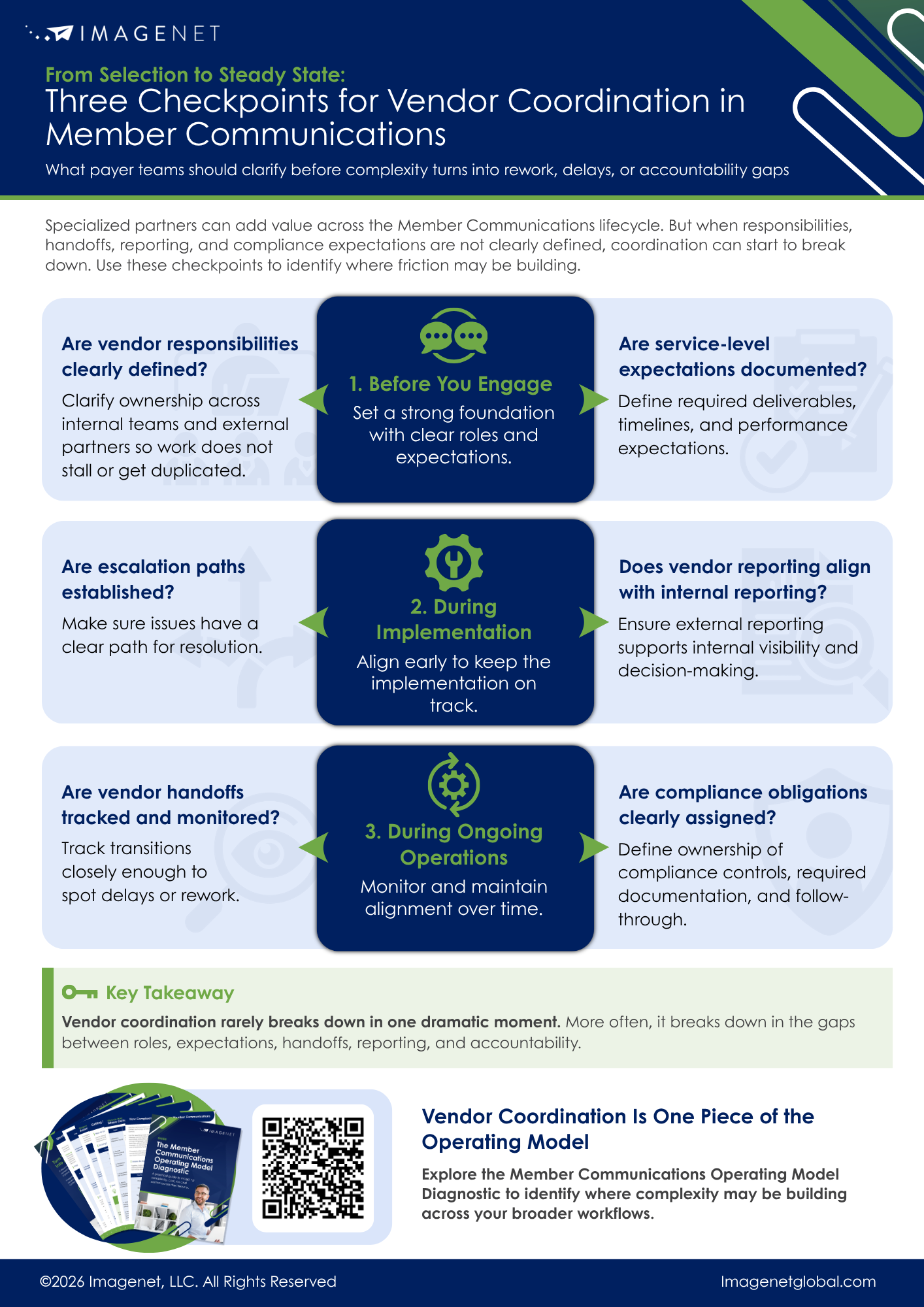
Where Vendor Coordination Breaks Down
Vendor coordination challenges rarely emerge from a single issue. More often, friction develops when responsibilities overlap, escalation paths are unclear, reporting is disconnected, or handoffs are not consistently monitored.
These gaps can increase manual effort, complicate decision-making, and create unnecessary operational and compliance risk.
By examining vendor relationships before engagement, during implementation, and throughout ongoing operations, payer teams can identify opportunities to strengthen coordination and reduce avoidable complexity.
Look Beyond Individual Vendors to the Broader Operating Model
Vendor coordination is one part of a larger member communications operating model. Even well-managed vendor relationships can be affected by fragmented processes, disconnected technology, repeated approvals, or limited visibility across the lifecycle.
Understanding how people, processes, technology, data, vendors, and controls interact can help payer teams pinpoint where operational complexity is building and prioritize improvements.
Ready to Identify Where Complexity Is Building?
Explore the Member Communications Operating Model Diagnostic to assess operational complexity, identify potential gaps, and prioritize opportunities to reduce rework, delays, cost, and risk across the member communications lifecycle.